

Public speaking can be nerve-wracking for anyone, but for children on the autism spectrum, it can feel especially overwhelming.
With communication challenges, sensory sensitivities, and social anxieties often in the mix, the idea of speaking in front of others may seem daunting.
But here’s the good news: with the right guidance and support, many autistic children can develop real confidence in their communication skills.
This article explores seven practical, empowering strategies for helping your child develop their public speaking abilities—ideal for parents looking to build confidence and communication at home.
Whether your child is verbal or nonverbal, expressive or reserved, these techniques can support their language skills and development, boost self-esteem, and improve their ability to connect with others.
How Communication Practice Supports Children with Autism
Exposing children on the autism spectrum to communication training in group settings—or even in front of an audience—can be a highly effective way to support their growth.
With the right support, these experiences can help strengthen communication, build confidence, and improve social interaction.
Safe, Structured Social Learning
Speaking in front of others gives children a chance to practise turn-taking, eye contact, and expressive language in a guided setting.
These social experiences often lead to improved participation in school and greater comfort with peers.
A Path to Self-Expression
Whether a child is verbal or uses AAC, structured speaking activities offer a clear way to express themselves.
Over time, this builds both confidence and a sense of achievement—key ingredients for communication success.
7 Ways to Foster Communication and Confidence in Children
Developing communication and confidence can be challenging for children on the autism spectrum.
These seven strategies offer practical, supportive ways to help your child express themselves, engage with others, and feel more comfortable speaking in front of a group.
1. Start with Your Child’s Interests
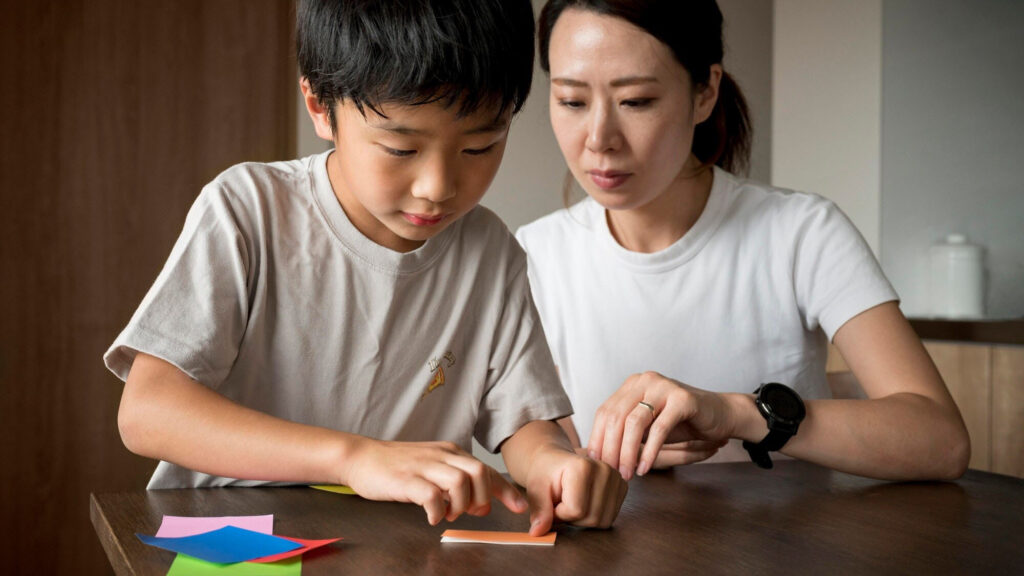
Every journey begins with something familiar. When teaching communication skills to children with autism, starting with their passions can make all the difference.
Whether it’s dinosaurs, trains, animals, or video games—use your child’s interests as a foundation for storytelling and conversation.
Using topics they love can increase motivation to speak or engage, help reduce anxiety in social interaction, and build vocabulary and language use naturally.
You can turn these interests into short speeches or presentations.
Let your child talk about their favourite things using short phrases or single words to start, gradually building toward short sentences.
2. Use Visual Supports and Alternative Communication Tools
Many children with autism spectrum disorder benefit from visual supports to help them process information and express themselves.
These tools can include:
- Communication boards with images
- Visual schedules or cue cards
- Sign language or gesture
- Augmentative and alternative communication (AAC) device
For children with nonverbal autism or limited speech, these tools are essential.
They support children with a communication disorder by improving expression and strengthening language outcomes, as highlighted by current autism research.
They also offer a bridge toward spoken language as confidence builds. Regularly reviewed visual aids can also support memory and reduce the stress of recalling talking points during a speech.
If your child uses a communication board or AAC device, encourage them to use it on stage too—it’s part of their voice.
3. Break Down Communication Skills into Manageable Steps
Public speaking involves a mix of language, cognitive, and social communication skills. To support a child with autism, break down the task into smaller, teachable components.
Teach One Skill at a Time
👉 Start with a greeting like “Hi, my name is…”
👉 Practice looking in the direction of the audience
👉 Introduce simple pauses between thoughts
👉 Model expressive gestures or facial expressions
👉 Practice speaking turns in a group setting
Role-playing and repetition are especially effective when teaching children with autism how to navigate social and speaking situations.
4. Practice Through Play and Role-Playing
Learning through play can be a powerful tool, especially when working on language development and social skills.
Set up mock stages at home, create pretend audiences with toys or family members, and let your child rehearse in a safe, playful environment.
Role-playing different social situations, like introducing themselves or answering a question, also helps improve communication.
For example, pretend scenarios at home can build confidence over time.
You can model how to respond with appropriate behaviors, then guide your child through practicing them using short phrases or even body language.
5. Encourage Use of Body Language and Nonverbal Communication

Public speaking isn’t just about words—non-verbal communication plays a major role.
Teaching your child to use gestures, facial expressions, and body posture helps them engage with their audience and convey emotions.
Some children on the autism spectrum may struggle with understanding or using body language. You can support them by:
Making Nonverbal Communication Relatable
Nonverbal cues can be tricky for some children to grasp, especially those on the autism spectrum.
With the right support, you can help your child recognise and practise these important communication tools in a fun and accessible way:
- Watching videos of engaging speakers together
- Practicing facial expressions in front of a mirror
- Playing emotion-matching games
These activities help a child communicate emotions through expressions and increase their confidence in using nonverbal cues during a presentation.
6. Celebrate Progress Over Perfection
Every child is different, and progress looks different for each one—especially for autistic children.
Celebrate the small wins:
✅ Speaking a full sentence
✅ Making brief eye contact
✅ Standing on stage without freezing
✅ Using a new word or phrase
When children feel supported and acknowledged, they’re more likely to try again.
Avoid comparisons to non autistic children and instead focus on individual growth and effort.
Let your child know it’s okay to feel nervous, and that making mistakes is part of learning.
A positive, accepting environment can help reduce anxiety, especially when your child faces difficulties with public speaking, and build resilience.
7. Use Video Practice and Positive Feedback Loops
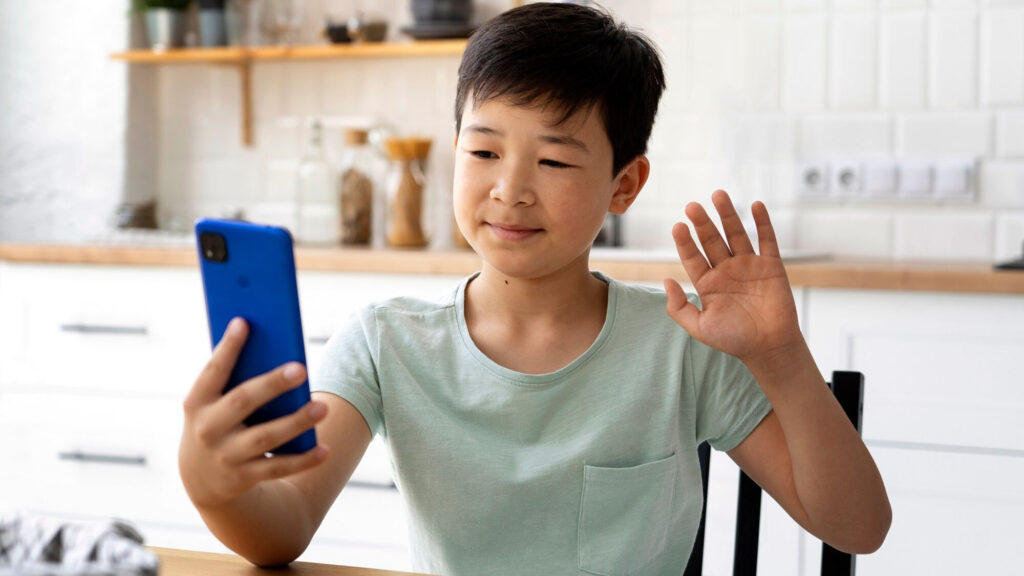
A practical and motivating way to help children improve their public speaking skills is to record short practice videos at home.
Start with simple sentences or introductions, then gradually build to longer statements as your child becomes more comfortable speaking in front of a person or a small group.
Why Video Works
Video practice is a low-pressure way to build confidence and develop public speaking habits over time.
It’s especially helpful for children who benefit from visual learning and self-reflection:
- It allows children to see their own progress
- It creates a relaxed environment without the pressure of a live audience
- It helps them notice and improve body language and facial expressions
After watching, always highlight what they did well before offering gentle tips.
Let them take the lead in choosing which videos to watch again or share with family members.
This encourages pride in their communication and creates a supportive feedback loop.
Helping Autistic Children Speak with Confidence
At The Eloquence College, we understand that public speaking can be especially challenging for children with autism and other developmental disorders.
We also believe strongly in their potential to grow and shine with the right support.
Our public speaking for kids courses are designed to be inclusive, nurturing, and tailored to individual abilities.
We support children who are on the mild end of the autism spectrum or who have similar learning needs that allow them to participate in small-group settings.
Whether your child is just beginning to speak or is ready to practice in front of a group, we:
✅ Use visual supports, play-based learning, and step-by-step skill building
✅ Integrate speech and language therapist-informed practices
✅ Focus on your child’s communication skills, not just performance
✅ Provide a non-judgemental space where every voice matters
We welcome nonverbal children, children with limited speech, and those working with speech pathologists.
Our goal is to create a safe, fun environment where children learn to express themselves with confidence.
Reach out to us today to find out how we can support your child’s journey into public speaking and stronger communication.